

Manufacturing today operates under constant pressure for speed, cost efficiency, and predictability. Decisions that should be made within minutes often come too late. Rework consumes productive capacity, bottlenecks only become visible once they have already disrupted production flow, costs fluctuate without clear explanation, and strategic KPIs remain static in dashboards instead of driving action on the shop floor. The root of these challenges rarely lies in a lack of data, but rather in the lack of integration between data and operational decision-making.
This scenario is reinforced by recent industry data. Studies indicate that only around 30% of manufacturing companies are able to consistently extract value from their digital initiatives, and fewer than 10% operate with sufficiently integrated data to support real-time decisions across production, maintenance, and supply chain. Despite technological advances, digital maturity remains low precisely where operational speed is most critical.
At the same time, the market signals a clear shift in direction. The global digital twin market is projected to grow significantly, from €16.55 billion in 2025 to an estimated €242.11 billion by 2032, representing a growth rate close to 40%, largely driven by manufacturing. This is no longer a bet on innovation, but a direct response to the need to reduce uncertainty, anticipate problems, and operate with greater control in increasingly complex environments.
In this context, the Digital Twin moves beyond being a sophisticated digital representation of a physical system and becomes an operational management asset. The challenge, however, is not simply adopting the technology. The true differentiator lies in implementing the Digital Twin with method, governance, and continuous improvement routines, connecting reliable data, strategic KPIs, and decision-making at the pace of operations. This is what transforms digital models into real competitive advantage.
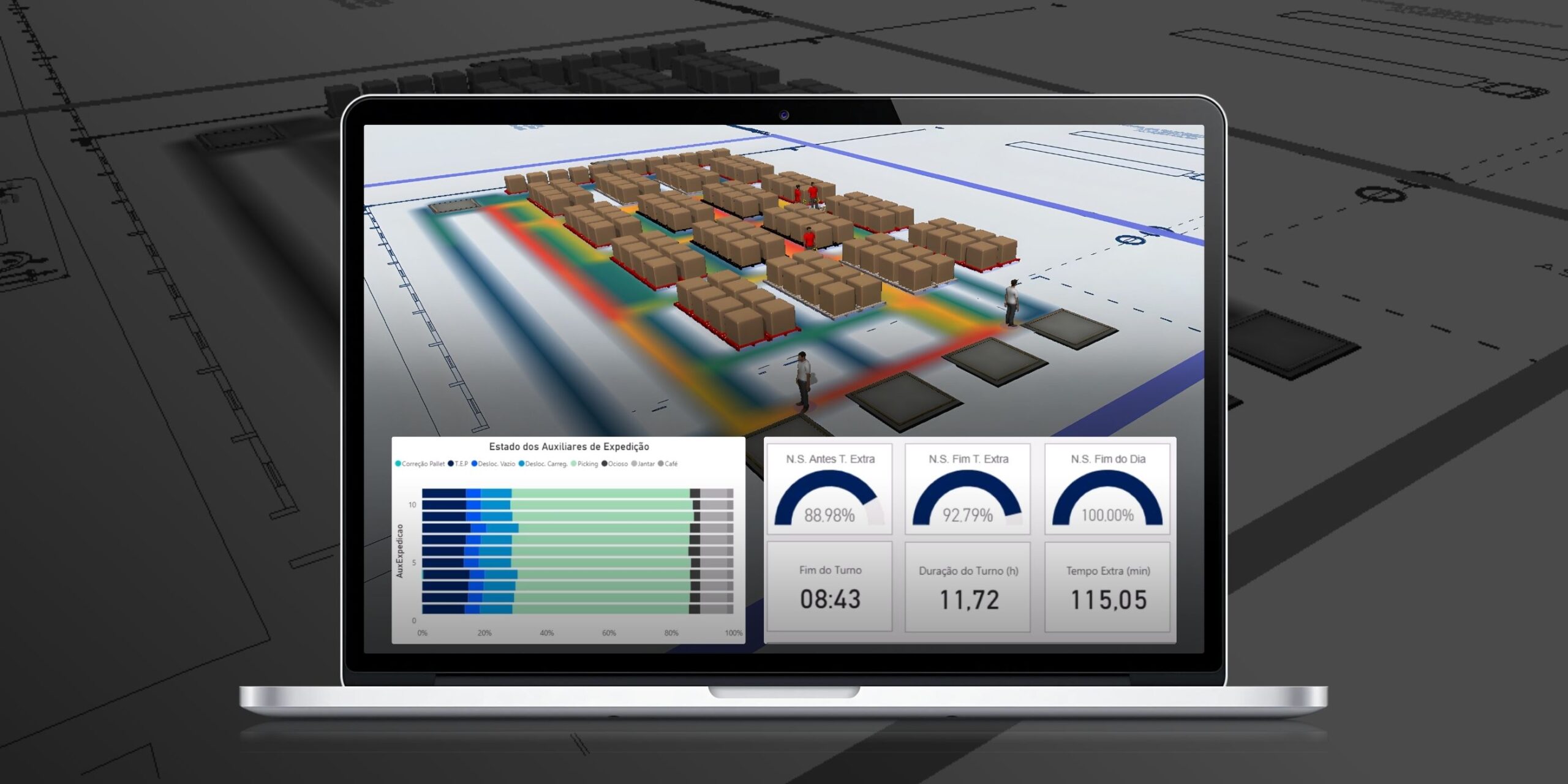
How to Generate Real Value with Digital Twin in Manufacturing
Before delivering tangible results, many Digital Twin initiatives face recurring challenges across industrial environments. These challenges are typically less about technology and more about how the project is structured and executed:
- Lack of integration between critical systems: Data from sensors, equipment, ERP, and manufacturing systems remain disconnected, making it difficult to achieve a consistent and reliable view of the production process.
- Overly broad scope without value prioritization: Projects initiated without a clear and measurable use case tend to delay delivery and dilute perceived impact.
- Diffuse ownership of the initiative: Without clear accountability, decision-making becomes fragmented across IT, operations, and engineering, compromising prioritization and model evolution.
- Objectives disconnected from operational results: When the focus is solely on implementing technology rather than improving specific performance indicators, the Digital Twin loses relevance for day-to-day management.
When properly structured, the Digital Twin begins to deliver fast and measurable gains. Its main advantage lies in anticipating system behavior and transforming operational data into more accurate decisions. Key areas of value generation include:
- Production predictability: By simulating bottlenecks, product mix variations, and operational constraints before execution, the Digital Twin reduces cycle time variability and increases the reliability of production plans. In industrial operations, this can represent improvements of 15% to 20% in schedule adherence, with reduced need for emergency adjustments.
- Production cost reduction: The simulation of machine parameters, sequencing, and operational conditions enables the identification of optimal configurations that minimize rework, scrap, and raw material waste. Decisions that once relied on trial and error can now be tested virtually, with direct impact on cost structure.
- Operational workforce productivity: Based on real process data, the Digital Twin can recommend more efficient operational sequences by shift or production cell. This reduces idle time, eliminates unnecessary activities, and minimizes rework, increasing productivity without requiring immediate resource expansion.
- Capacity and growth planning: Before investing in new assets or expansions, the Digital Twin allows companies to test demand increase scenarios, layout changes, or the introduction of new products in a virtual environment. This supports safer investment decisions, based on data rather than assumptions.
Implementing a Digital Twin in Manufacturing: A Structured Approach
A successful Digital Twin implementation requires a structured roadmap focused on value generation, data reliability, and operational governance, ensuring that the digital model becomes part of the factory’s decision-making routine.
- Data and process maturity assessment
Map data sources, integration gaps, and critical processes that impact decision-making. This assessment defines where the Digital Twin can generate value most quickly. - Definition of clear objectives and business KPIs
Establish measurable goals directly linked to operations, such as reducing setup time, increasing OEE, or improving failure prediction capabilities. - Integrated data architecture
Connect sensors, MES/MOM, ERP, and maintenance systems to build a unified data repository. - Digital Twin modeling
Use simulation and mathematical models to represent the behavior of assets, production lines, and processes. - Testing and validation with real data
Compare model outputs with actual operations, calibrating parameters until the model becomes reliable. - Governance and operational routines
Establish review cycles, assign clear ownership, and create a regular cadence for operational teams to use insights generated by the model.
Continuous Improvement with Digital Twin
The Digital Twin is not a one-time project, but a continuous improvement solution. Sustaining results requires establishing a management routine based on the following steps:
- KPI review: Weekly or biweekly meetings to analyze KPIs generated by the Digital Twin, ensuring insights are translated into actions and value is measured.
- User feedback and process adjustments: Feedback from shop floor operators is essential, as they are the first to identify gaps between the model and reality, enabling rapid adjustments.
- Model and parameter updates: As the factory evolves with new equipment or products, the Digital Twin must be continuously updated, including recalibration and the incorporation of new simulation rules.
- Training and change management: Success depends on adoption. Continuous training and cultural change management are critical to ensure teams trust and use the Digital Twin as a primary decision-making tool.
The Digital Twin is no longer a trend, but a competitive differentiator in manufacturing. The real challenge lies in transforming technology into consistent operational decision-making, supported by reliable data, strong governance, and a clear focus on results.
At EYF, we specialize in leveraging advanced analytics, simulation, optimization, and Digital Model, Digital Shadow, and Digital Twin technologies to help companies make data-driven decisions that increase efficiency and profitability. With solutions such as Sentr.IA, we connect data to operations and transform digital models into real business value.
Would you like to understand how to apply Digital Twin in your operation and achieve tangible results? Get in touch with our specialists.
